The History of Kankanaey Tribe
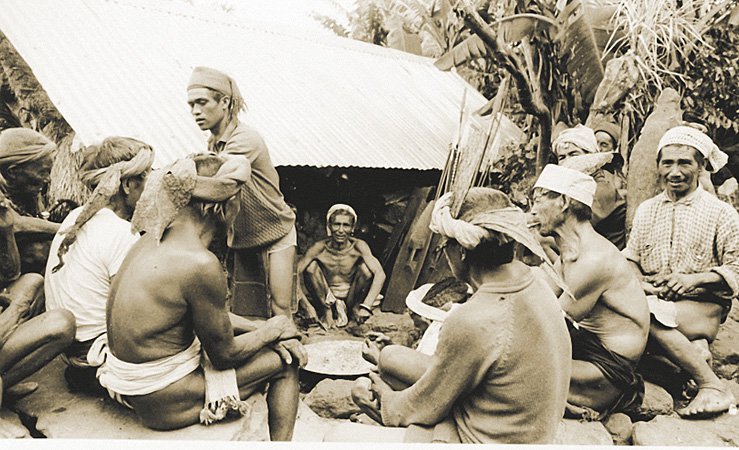
Northern and southern Kankanaey have always been rice-terracing farmers. The original 34 villages of northern Kankanaey are concentrated near the Kayan-Bauko and Sumadel-Besao areas, on highslopes of the central Cordillera range. These communities appear to have existed long before the Spaniards arrived in the archipelago. The size of their rice terraces, which must have taken a long time to build, is proof. The fact that these terraces, as well as the names of the first communities, were recorded in the records of the first Spanish expedition to the Cordilleras in 1665 confirms the existence of early Kankanaey civilization.
Kankana-eys were first described in the early 1990s. The Southern Kankanaey are one of the Cordillera's ethnolinguistic groups. They live in Mountain Province and Benguet, specifically in the municipalities of Tadian, Bauko, Sabangan, Bakun, Kibungan, and Mankayan. Benguet's original inhabitants were the kankana-ey. The Kankanaey live in the uplands of Benguet province and are part of the "Igorots" tribe, which is one of the larger tribes in the region.
They are hardworking agricultural workers who have already been reached by modern technologies. The Kankanaey construct rice terraces, which have become self-sufficient food sources. Camote, rice, potatoes, and other root crops such as tugi and gabi are Kankanaey staple foods. Kankanaey marriage customs are similar to those of the Ibalois. They engage in parental marriage. A wedding is marked by large feasts and numerous rituals performed before and during the wedding ceremony. The butchering of animals is a crucial aspect of the wedding. There have been cases of intermarriage with lowland people in the past. However, due to negative experiences, this practice is already on the decline. Kankanaey families believe that husbands are the family's head and that elders should be respected in the community.
Because of their bilateral kinship, they are predominantly a nuclear family type (sinbe-ey, buma-ey, or sinpangabong), which are either patri-local or matri-local. They are composed of the husband, wife, and their children. The Southern Kankana-eys' kinship group consists of his descent group and, once married, his affinal kinsmen. Their society is divided into two social classes based on land ownership: rich (baknang) and poor (abiteg or kodo). The baknang are the main landowners to whom the abiteg provide services. However, there is no clear distinction between the baknang and the abiteg in the Mankayan Kankana-eys, and all have equal access to resources such as copper and gold mines.
The Spaniards climbed the Cordillera in search of the famous gold. They left the area after three years, unable to maintain their outpost. The Spaniards returned in the early nineteenth century, establishing a politico-military comandancia in the Lepanto district in 1852. The Kankanaey resisted. Head hunting was a part of this mountain culture, which colonialists--first the Spaniards, then the Americans--sought to eradicate.
Spanish control was eventually established through the use of force of arms and proselytization. A Spanish mining company has begun exploitation of Mankayan's copper mines. The Spanish authorities forced people in some districts to grow coffee and tobacco for the colonial government. In some areas, missions and schools were established. The opening of the Cordillera's western flank set in motion acculturative processes that would have a significant impact on subsequent historical periods. Christianization, urbanization, political modernization, and integration of a highland agricultural society would be among these processes.
The Igorot people were drawn into the conflict between Spanish and American forces, as well as the subsequent war of independence waged by Filipino revolutionaries against the new colonial forces. While the nation was experiencing the age-old hostilitieshroes of a full-fledged national war, age-old hostilities between the Lepanto Igorot and their traditional rivals, the Bontoc, were reignited. For a time, there was a resurgence of headhunting, until pacification set in under the new politico-military regime. Protestantism, military service, and education helped to shape a new Igorot identity for the Kankanaey and other Cordillera people, particularly the newly educated elite.